
Why Automate Identity
The hidden cost of “good enough” Identity Operations.

Manual effort, delays, risk and complexity can quietly add up as your environment grows.
People join, roles change, access gets requested and approved. Accounts are created and employees leave. Behind those outcomes, though, there can be a growing amount of operational work: tickets, scripts, approvals, manual updates, exceptions and follow-up.
None of it necessarily looks like a problem on its own. But as you add more identities, applications, business units and policies, all of that effort can start to compound. Here are five places the hidden cost starts to show.
FIVE SIGNS
Here are five places the hidden cost starts to show.
1
Skilled capacity disappears into administration.

Your team’s expertise is spend on manual tasks instead of higher value work. Tickets, updates and exceptions take time away from strategic initiatives.
Ask yourself:
How much of your time is spend on manual identity administration instead of higher value work?
2
Approved doesn’t always mean done.

Access approvals are just one step. They still need to be provisioned across multiple systems, each with their own processes, timings and dependencies.
Ask yourself:
When someone is approved for access, how many systems still need to be updated before they’re fully ready?
3
Waiting becomes part of the cost.

Delays in provisioning slow people down, create friction and generate more follow-up. Over time, these small delays add up to a significant cost.
Ask yourself:
Where do delays most often occur in your current process, and what do they cost your business?
4
Complexity compounds

More applications, business changes and new types of identities make identity operations harder to manage. Each new requirement increases the operational load and the risk of something being missed.
Ask yourself:
What’s changed in your environment in the last 12-24 months that has made identity operations more complex?
5
Workarounds slowly become the operating model.

When the progress is too slow or complex, workarounds emerge. Over time scripts, manual checks and ad-hoc processes become critical dependencies.
Ask yourself:
Where are workarounds filling gaps in your current process, and what risks do they create?
FROM REQUEST TO RESULT | END TO END WORKFLOW
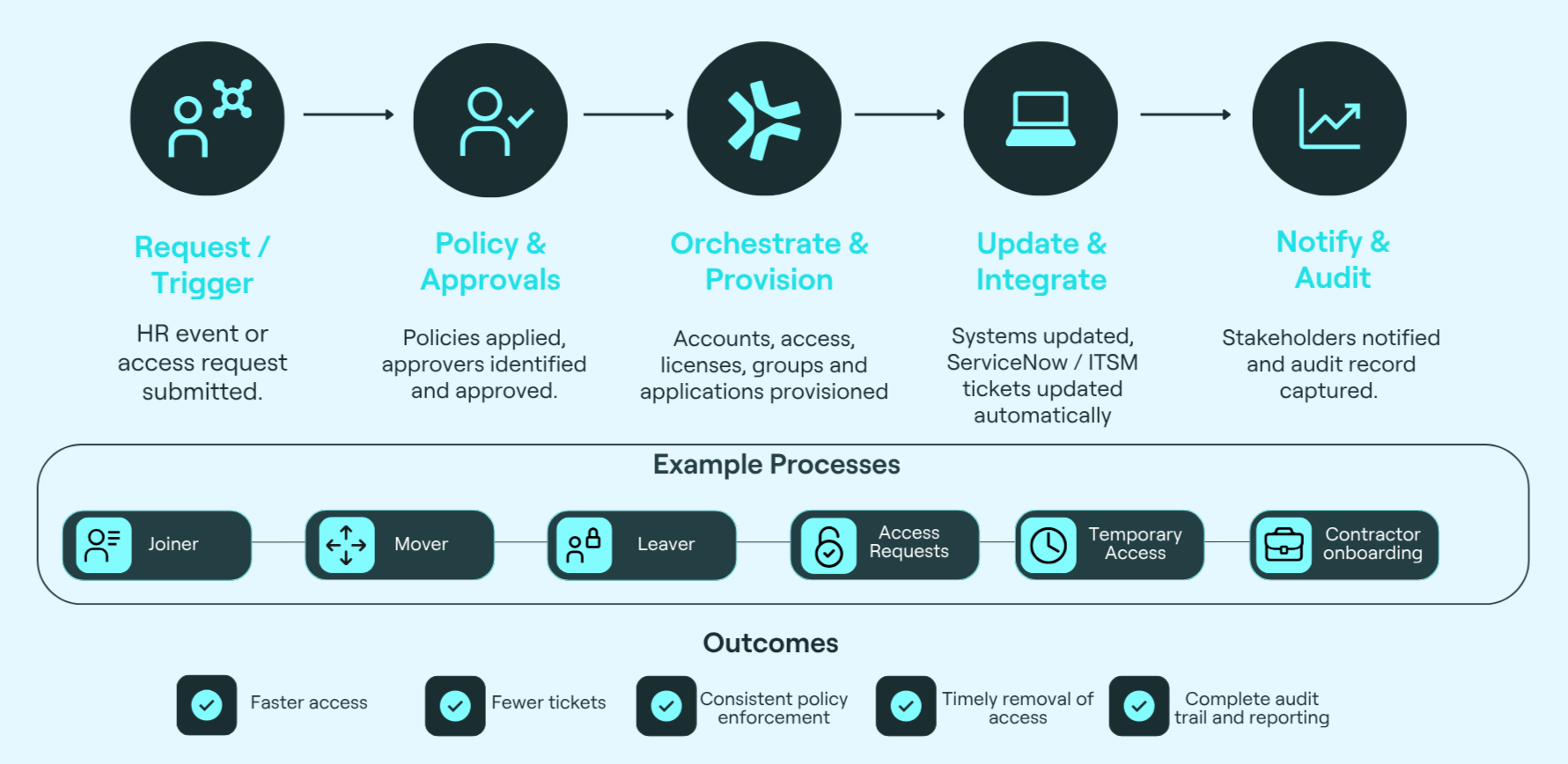
What actually happens behind an identity request?
A request can look simple from the outside, but behind it can sit approvals, policy checks, provisioning, system updates, notifications and audit requirements.
WHAT THIS MEANS
Sound familiar?
The hidden cost of identity operations rarely appears as one large problem. It tends to show up in smaller ways.

A ticket that shouldn’t really need to exist.

An approved request that still needs manual fulfilment.

An exception that always lands with the same person.

A new application that adds steps to an existing process.

A growing audit workload.

A script that nobody particularly wants to touch.
More identities creating more administration.
An employee waiting for access.
None of these necessarily means your identity environment is broken.
But together, they can create a significant amount of operational drag.
CUSTOMER STORIES
Real organisations. Real Results.
By reducing operational drag, Activate customers can support more identities and change, with less manual effort.
National Broadcaster Automates Identity Lifecycle Management

This national broadcaster was losing around 40 hours each week to manual user administration.
Retail Organisation Chooses Identity Automation

This national retailer now manages more than 107,000 provisioning requests each year with Activate.
Government Agency Automates Identity Lifecycle Management

This government agency reduced manual identity work by 50%, and cut identity-related service desk tickets by 30–45%.
A DIFFERENT PERSPECTIVE
If this feels familiar, your IAM platform might not be the problem.
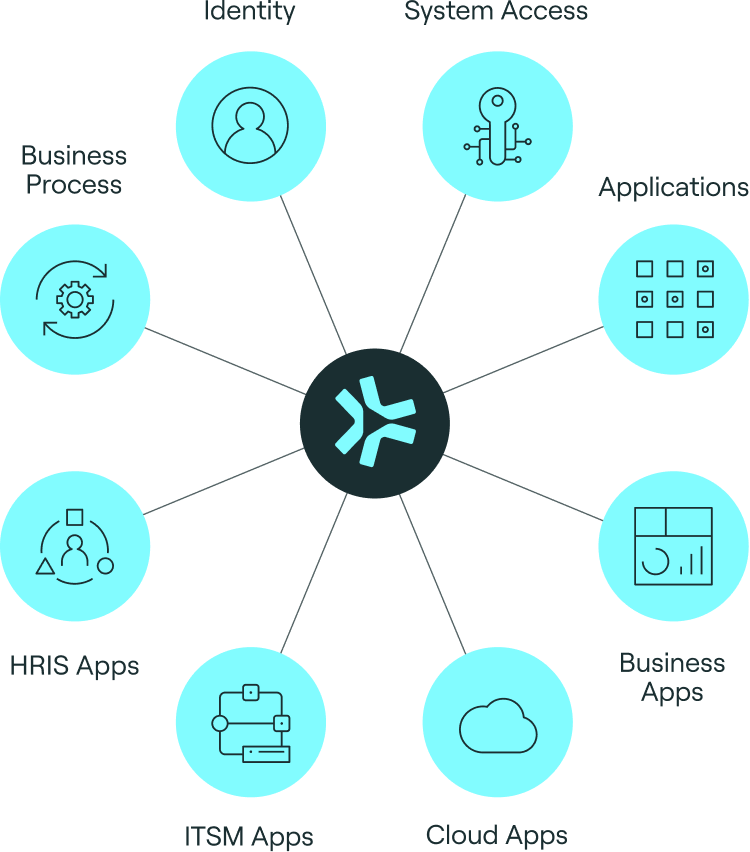
Enterprises already have identity technology like Microsoft Entra / Activate Directory, SailPoint, Saviynt, ServiceNow, HR systems and business applications. The challenge is making them work together.
Identity operations is the operational layer that connects identity decisions, lifecycle events and requests with the systems where the work actually needs to happen.
It covers the approvals, provisioning, updates, fulfilment, exceptions and evidence required to get from “something needs to change” to “it’s done".
Activate automates and orchestrates that work across the platforms you already use, helping reduce manual hand-offs, tickets and repetitive administration without replacing the core systems underneath.
THE OPPORTUNITY
Stop operational effort growing every time your identity environment does.
More identities should not automatically mean more tickets, more applications should not always mean more manual steps, and more complexity should not have to mean more administration.
More identities without more tickets.
More applications without more manual steps.
More complexity without more administration.