
By Using Provisioning and Access Management to Save 40 Hours of IT Time Per Week

Customer Snapshot
Organisation: Television New Zealand, national broadcaster
Industry: Media and broadcasting
Workforce: More than 1,300+ permanent, freelance and casual staff
Environment: Microsoft Active Directory, Exchange, Sharepoint and enterprise collaboration systems.
Jobs to be done: Automate user provisioning, remove outdated accounts, reduce manual administration and give a 24/7 workforce faster access
Solution: Activate Identity Lifecycle
“Automating user management processes with Activate means managers can provide casual or freelance staff with access to the office system without having to wait for the service centre to open on a Monday morning.”
The Challenge
TVNZ is a 24-hour media organisation with permanent employees, freelancers and casual staff working across New Zealand and overseas. But its technology service centre operated between 8am and 5pm, five days a week.
Setting up each new user was a manual process that took around an hour. Accounts had to be created and access assigned across distribution lists, shared folders, SharePoint sites and other systems. Much of this work depended on one or two people who knew how to configure accounts correctly in Active Directory.
This created delays for employees and contractors. Someone needing access outside service centre hours could be left waiting until the team returned, even when their work could not wait.
The manual workload was also affecting the service centre. Its eight-person team was so busy with routine administration that some tasks had been passed to third-level support specialists simply because other teams did not have the capacity.
Then TVNZ identified a bigger problem: it had around 3,000 user accounts on record, compared with a workforce of approximately 1,300 people. Around 2,000 accounts appeared to be obsolete.
Those accounts represented more than untidy administration. They increased potential security exposure and contributed to rising software licensing costs.
The Jobs TVNZ Needed to Get Done
TVNZ needed a more reliable way to:
Set up permanent, freelance and casual workers quickly
Give people the access required for their department and role
Remove or deactivate accounts when they were no longer needed
Reduce dependence on a small number of Active Directory specialists
Make routine administration easier for the wider service centre
Support people who needed access outside normal service centre hours
Reduce security risk and control unnecessary licensing costs
Keep a clear, auditable record of user and access changes
The goal was not simply to create accounts faster. TVNZ needed to make the whole process more consistent, easier to manage and less dependent on manual intervention.
Where the Hidden Costs Were Building
No single provisioning task looked especially large. The cost accumulated one employee, one account and one access change at a time.
Every hour spent setting up a user was an hour the service centre could not spend on more valuable technical work. Every request handed to a specialist used expensive expertise for routine administration. Every person waiting for access lost productive time.
The outdated accounts created another layer of cost. TVNZ was potentially paying for licences linked to people who no longer worked for the organisation. Accounts that should no longer have existed also made it harder to maintain clean, appropriate access.
There was a knowledge cost too. When only one or two people knew how to complete user setup correctly, routine provisioning became dependent on their availability. That made the process harder to scale and more vulnerable to delays or inconsistent results.
Individually, these problems could look like ordinary IT administration. Together, they were consuming around 40 hours of manual effort every week.
The Solution: Automate the Work Behind Each New User
TVNZ implemented Activate Identity Lifecycle to automate user provisioning, access management and account deactivation across its existing environment.
The project team established standard access requirements for each department. These defaults defined the shared folders, distribution lists and SharePoint sites a new staff member should receive.
When a user was created, Activate could apply the appropriate access consistently instead of requiring someone to work through each step manually.
The solution automated:
New-user account creation
Department-based access assignment
Shared folder access
Distribution list membership
SharePoint access
Account updates and deactivation
Tracking and audit records for user changes
This turned user setup from a specialist manual task into a consistent process that could be carried out by more members of the service centre team.
Making Routine Access Easier to Manage
Activate also allowed appointed people within each department to manage their own distribution lists.
They could add and remove members without asking the service centre to make every change. They also gained clearer visibility into who already had access.
This moved routine decisions closer to the people who understood the business need, while keeping the process controlled and visible.
For a business operating around the clock, automation also reduced dependence on service centre opening hours. Managers could arrange access for casual and freelance staff without waiting until Monday morning for the service centre to reopen.
“Activate is saving us roughly 40 hours every week of manual system administration. ”
The results at a glance
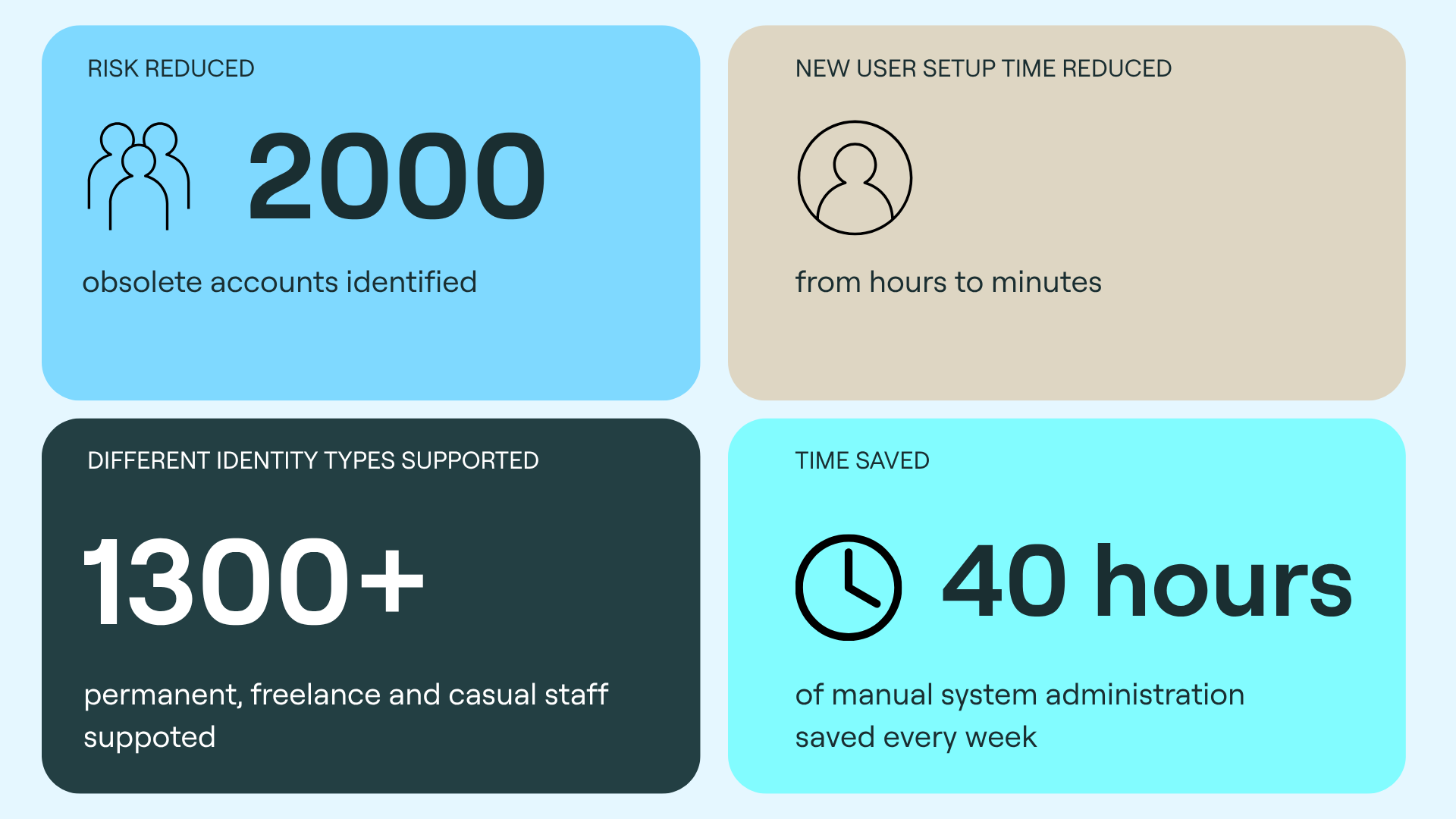
Because TVNZ operates 24 hours a day while its technology service centre operates during standard weekday hours, access delays were particularly difficult for casual and freelance staff. Activate enabled authorised managers to initiate standardised account and network access processes without waiting for manual fulfilment.
TVNZ also enabled appointed staff within individual departments to manage membership of email distribution lists. This reduced service centre requests while providing greater visibility into who had access to each list.

The Outcome: Less Administration and Faster Access.
Activate automated the manual tasks involved in setting up new users, reducing the process from around an hour to minutes.
TVNZ estimates that it now saves approximately 40 hours every week in manual system administration. That is the equivalent of one full-time working week returned to the technology team.
The service centre gained more capacity to plan its work and focus on higher-value technical tasks. Routine administration no longer had to depend on one or two specialists, and user changes could be completed more consistently by the wider team.
Permanent employees, freelancers and casual staff could receive access faster, including people beginning work outside standard service centre hours.
Automation also gave TVNZ better control over user accounts and access. Provisioning activities became easier to track and audit, while more consistent account management helped address the risks and licensing costs associated with obsolete accounts.
“We used to rely on one or two people to set up user accounts manually in Active Directory. Now that we’ve put this process into Activate, anyone can do it. What’s more, it’s all fully auditable.”
Key Outcomes
Approximately 40 hours of manual system administration saved each week
New-user setup reduced from around one hour to minutes
Routine provisioning no longer dependent on one or two specialists
Faster onboarding for permanent, casual and freelance staff
Access provisioning available beyond normal service centre hours
More consistent user setup based on department requirements
Improved visibility and auditability of user changes
Reduced risk associated with outdated or inappropriate access
Greater control over licensing costs
Department teams able to manage distribution list membership
More service centre capacity for higher-value work
The Bottom Line
The hidden cost of user administration was spread across hundreds of small jobs. An hour setting up a new employee. A specialist completing a routine account change. A freelancer waiting for access. An obsolete account continuing to consume a licence.
Individually, these tasks were easy to overlook. Together, they consumed around 40 hours every week and left TVNZ with far more active accounts than people.
By automating identity lifecycle management, TVNZ reduced manual effort, gave its workforce faster access and made user administration more consistent and auditable.
The result was not simply faster account creation. It was a service centre with more time for the work that needed its expertise.
How Much Time Is Manual User Administration Costing You?
If onboarding, account changes and offboarding still depend on manual tasks, we can help you identify where identity lifecycle automation could have the greatest impact.