

Global Dairy Enterprise Automates More Than 300,000 Access Requests Each Year
Customer Snapshot
Organisation: Global dairy enterprise
Industry: Food manufacturing and export
Users supported: Approximately 12,500
Environment: Major ITSM platform, Microsoft services, directories, secure folders and enterprise systems
Jobs to be done: Give users a simple place to find services while automating access requests, approvals and provisioning at scale
Solution: Activate Access Automation
The Challenge
A global enterprise receives a lot of access requests. People need to join distribution lists, access secure folders, reset passwords, complete site inductions and use services across different locations and systems.
When every request depends on the service desk, IT teams spend time checking details, finding approvers and making changes across connected systems. Employees wait while requests move between teams.
The organisation needed to automate high-volume access services without adding more manual effort as demand grew. It also wanted business owners, rather than IT, to make routine access decisions.
The Jobs the Organisation Needed to Get Done
Give users one clear place to find services
Let employees request access without raising a service desk ticket
Send requests to the right business owner
Provision approved access automatically
Reduce service desk workload and fulfilment delays
Keep requests, approvals and changes visible
Retain its existing ITSM investment
The goal was not to replace ITSM. Instead, it was to stop routine identity work from becoming another manual ticket queue.
The hidden cost sat behind thousands of everyday access requests.
A distribution list change. A secure folder request. A password reset. A user waiting while a ticket moved between teams. Each task looked small, but repeated at enterprise scale, they created a significant workload.
IT was also involved in decisions better made by the business owners responsible for the resource. This added another hand-off and slowed fulfilment.
Without automation, service desk demand would have continued to grow alongside the number of users, systems and access changes.
The Solution: Automate Access Behind the ITSM Experience
The organisation introduced Activate Access Automation for identity and workplace services that could be requested, approved and provisioned automatically.
When a major ITSM platform became its primary user portal in 2016, Activate remained part of the model. The ITSM platform became the front door for general services and incidents, while Activate handled specialist access requests.Activate supported services including:
Distribution lists
Secure folders
Password resets
Site induction surveys
Selected security systems
Microsoft Teams and DDI provisioning
Moving Access Decisions Closer to the Business
Activate sent requests to the business owners best placed to approve them. Once approved, access was provisioned automatically.
Users received a faster service. Business owners retained control of their resources. IT no longer needed to approve and fulfil every eligible request.
Giving Each Platform a Clear Job
The ITSM platform provided the main front door for services and incidents
Users were directed to Activate for eligible identity services
Activate managed self-service, approvals, notifications and provisioning
Connected systems received the required access changes
This kept the familiar ITSM experience while preserving specialist identity automation behind it.
The Outcome: High-Volume Access Without High-Volume Manual Work
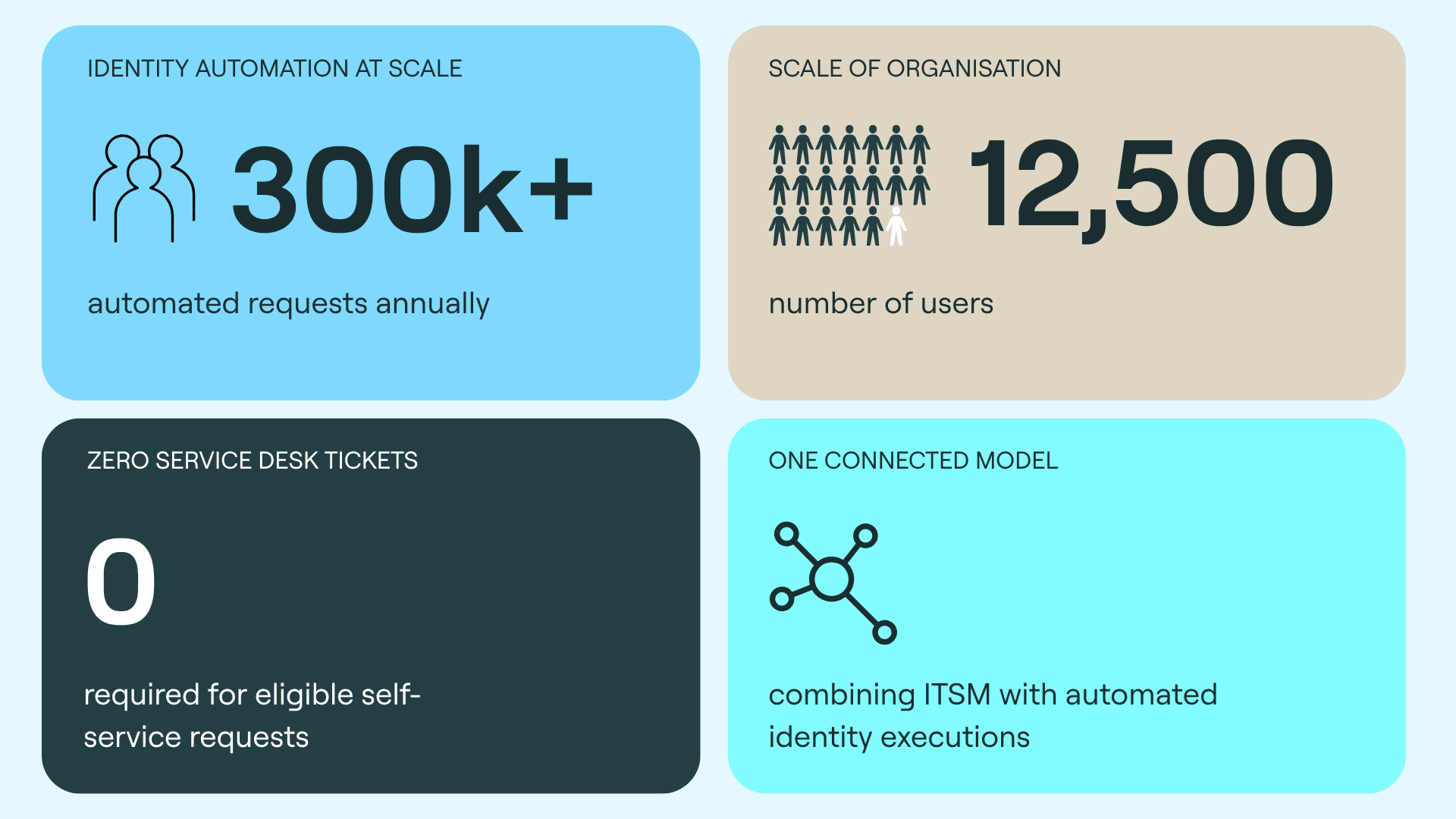
Activate now processes more than 300,000 automated provisioning requests each year across approximately 12,500 users.
Users continue to start with the organisation’s ITSM platform. For eligible identity services, they are directed to Activate, which manages the request, approval and provisioning without creating another service desk ticket.
The model reduces manual work, speeds up access and allows the organisation to handle growing request volumes without equivalent growth in service desk effort
Key Outcomes
More than 300,000 automated provisioning requests processed annually
Access services delivered across approximately 12,500 users
Less service desk involvement in routine fulfilment
Faster access through automated approval and provisioning
Business owners able to make access decisions
Eligible requests completed without a service desk ticket
Improved visibility of requests, approvals and changes
ITSM remained as the familiar front door
A scalable model for introducing additional automated services
The Bottom Line
The hidden cost of access management was spread across hundreds of thousands of small requests. Each ticket, approval, hand-off and manual change added time and effort.
The organisation did not need to choose between ITSM and identity automation. The ITSM platform remained the front door, while Activate handled specialist requests, approvals and provisioning behind it.
That separation allowed the organisation to support more than 300,000 automated requests each year without turning the same volume into service desk work.
How Much Access Work Is Sitting Behind Your ITSM Portal?
If approved access requests still need manual fulfilment, Activate can work alongside your ITSM platform to automate the work happening behind each ticket.