
By extending ServiceNow With Identity Lifecycle Automation and Reducing Manual Access Fulfilment by 70% in Six Months

Customer Snapshot
Organisation: Mid-sized enterprise
Workforce: 5,000+ users
Environment: ServiceNow, hybrid Active Directory and Microsoft Entra ID, and more than 120 applications
Jobs to be done: Retain ServiceNow for access requests and approvals while automating provisioning, role changes and deprovisioning across connected systems
Solution: Activate Identity Lifecycle
The Challenge
Our customer used ServiceNow for access requests and approvals, but much of the identity fulfilment behind those workflows remained manual. IT teams relied on custom PowerShell scripts, email hand-offs and limited connectors to provision access across more than 120 applications.
New employees could wait two to five days for access. Role changes did not always remove outdated permissions, while deprovisioning remained inconsistent across downstream systems.
This increased service desk workload, delayed employee productivity and made it difficult for audit teams to verify that every required access change had been completed.
The Jobs the Organisation Needed to Get Done
The job was to automate what happened after a request was approved, without replacing the ServiceNow experience users already knew. Our customer needed a more reliable way to:
Give new employees access from day one
Update permissions when people changed roles
Remove outdated access
Deprovision leavers across connected systems
Reduce manual fulfilment and fragile hand-offs
Keep ServiceNow as the request and approval platform
Where the Hidden Costs Were Building
The hidden cost sat between an approved request and the completed identity change. Every manual intervention consumed IT time, while scripts and email hand-offs created delays and depended on specialist knowledge.
Across more than 5,000 users and 120 applications, these gaps allowed permissions to accumulate, delayed access removal and made identity activity harder to trace.

The Solution: Add Identity Execution Behind ServiceNow
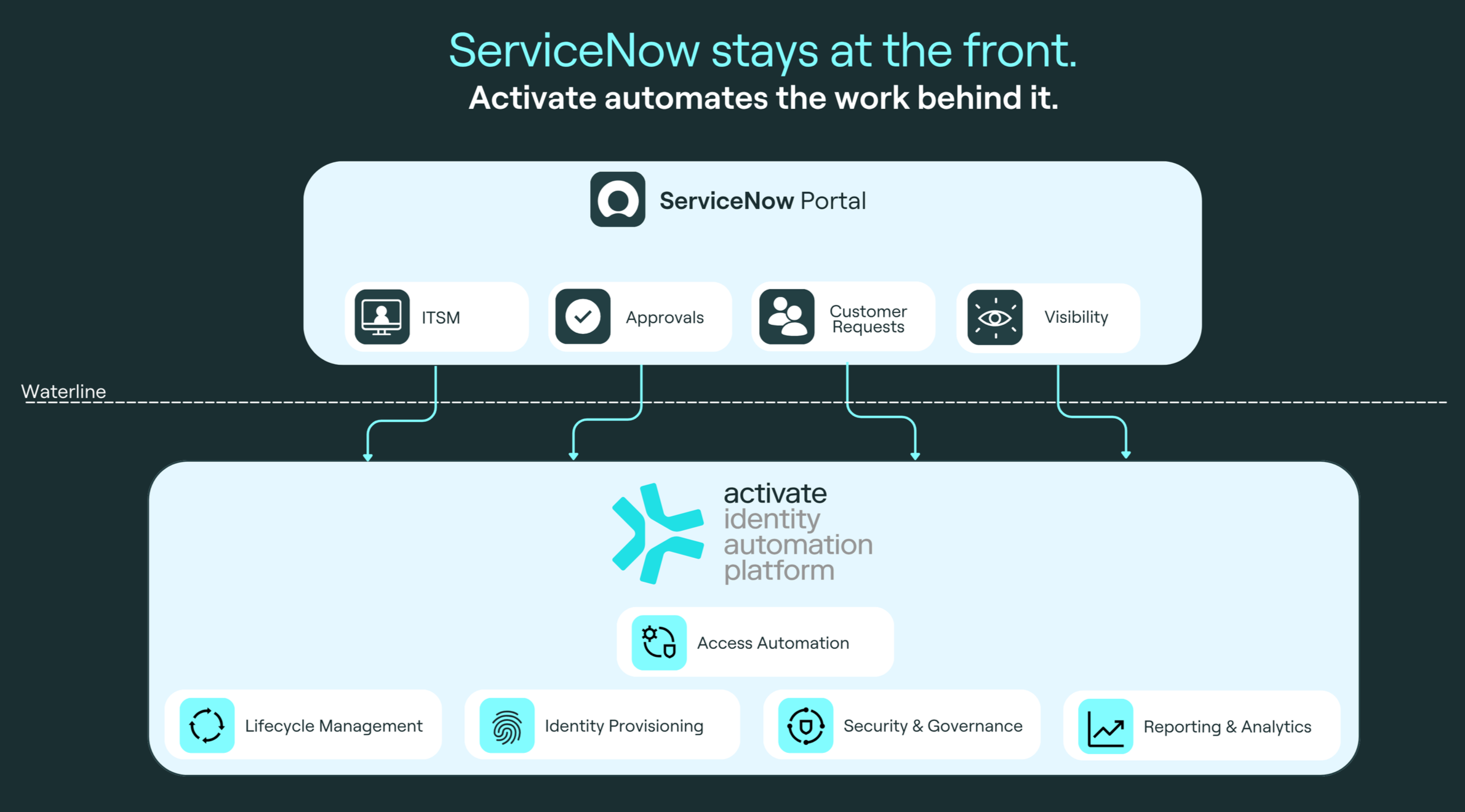
Our customer introduced Activate as the identity automation engine behind ServiceNow.
ServiceNow remained the user-facing portal and approval engine. When an approved request or lifecycle event required an identity change, Activate applied policy-driven updates across connected systems. Activate delivered:
HR-driven joiner, mover and leaver automation
Role-based access control
Cross-system provisioning
Automated removal of outdated permissions
Real-time deprovisioning
Identity-level audit traceability
This connected ServiceNow workflows with the execution needed to complete identity changes consistently.
The Outcome: Policy-Driven Identity Automation in Six Months
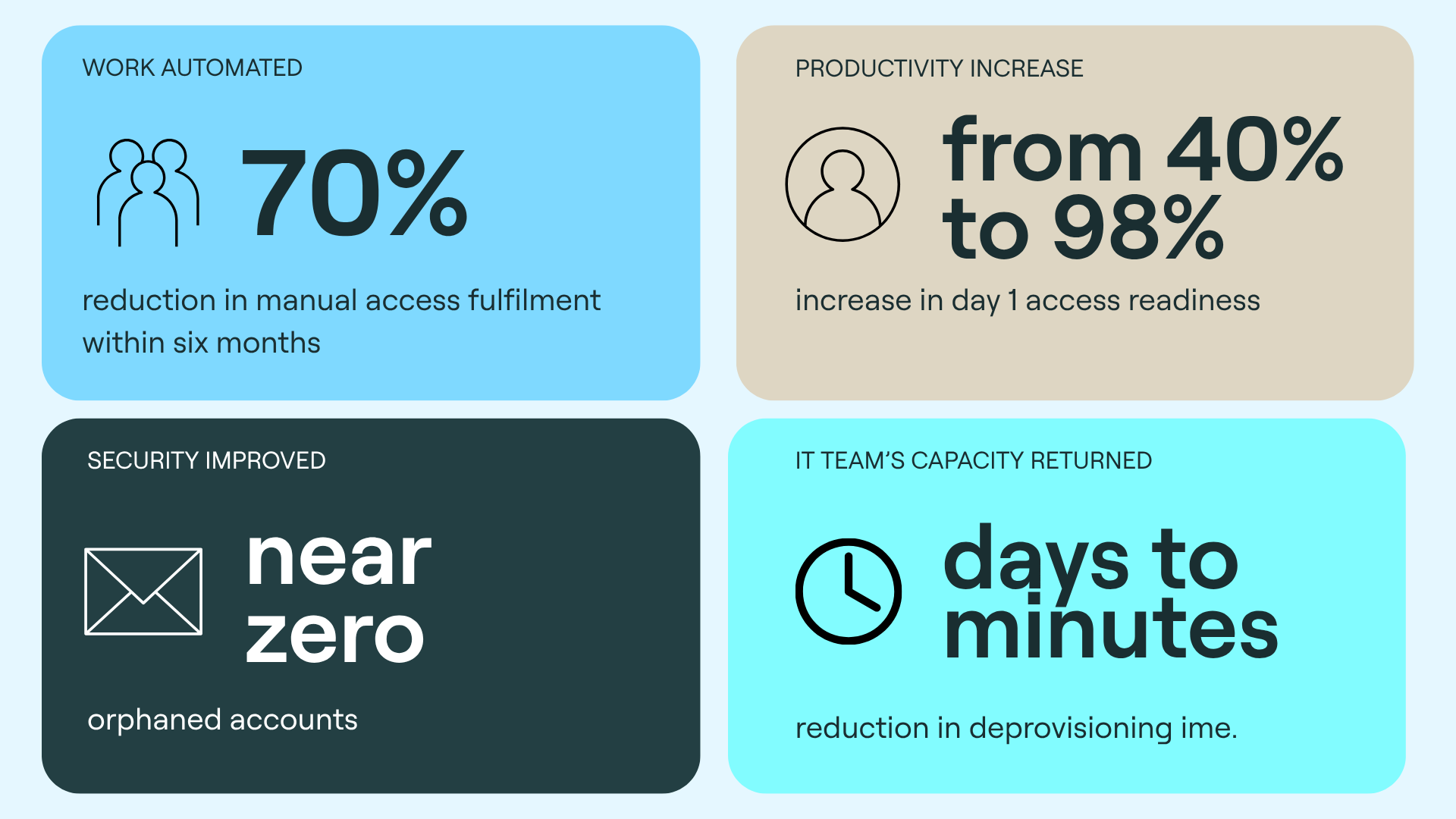
Within six months, manual access fulfilment fell by 70% and day-one readiness increased from 40% to 98%. Deprovisioning dropped from days to minutes, while automated access removal reduced orphaned accounts to near zero. The service desk spent less time on repetitive fulfilment, and identity-level audit records provided clearer evidence of provisioning and deprovisioning activity.
ServiceNow remained in place, but the identity work behind it moved from manual fulfilment to policy-driven automation.
Key Outcomes
Manual access fulfilment reduced by 70% within six months
Day-one readiness increased from 40% to 98%
Deprovisioning reduced from days to minutes
Orphaned accounts reduced to near zero
Less repetitive work for the service desk
More consistent changes across more than 120 applications
Reduced privilege creep and delayed deprovisioning
Improved identity-level audit traceability
ServiceNow retained as the request and approval platform
The Bottom Line
An approved ServiceNow request did not guarantee that every identity change had been completed. Manual intervention, scripts and email hand-offs still created delays and risk.
By adding Activate behind ServiceNow, the organisation automated identity execution without changing the front-end experience. The result was 70% less manual fulfilment, 98% day-one readiness and deprovisioning completed in minutes.
What Happens After Your ServiceNow Request Is Approved?
If identity fulfilment still depends on scripts, emails or manual IT work, Activate can automate the provisioning and access changes behind your existing ServiceNow workflows.