
And modernised more than 10,000 shared mailbox requests each year

Customer Snapshot
Organisation: Large New Zealand government department
Industry: Public sector
Workforce: More than 5,000 employees
Environment: Active Directory, Microsoft Entra ID, Exchange and Exchange Online
Shared mailboxes: More than 1,450
Jobs to be done: Make mailbox access faster, reduce service-desk workload and give business owners greater control
Solution: Activate Access Automation
The Challenge
This government department managed more than 1,450 shared mailboxes across a workforce of over 5,000 people.
Its IT team received more than 10,000 shared mailbox requests every year. These included adding and removing users, approving access and creating new mailboxes. Each request required manual service-desk involvement.
What looked like a simple access change often involved several steps. A user raised a ticket. IT identified the right mailbox and permissions. Someone confirmed whether access was appropriate. An administrator then completed the change.
The process consumed service-desk capacity and created delays for people waiting to access the information they needed. The department wanted to reduce manual requests without losing control over mailbox security and ownership.
The Jobs the Department Needed to Get Done
Let employees find and request access to shared mailboxes
Give business owners control over access decisions
Provision approved access automatically
Allow owners to add and remove mailbox members
Create new mailboxes using consistent standards
Reduce routine service-desk tickets
Maintain a clear record of mailbox access
Improve security, auditing and compliance
The job was not simply to create a better request form. It was to remove the manual work that happened after each request was submitted.
Where the Hidden Costs Were Building
No individual mailbox request appeared especially costly. The expense came from repeating the process more than 10,000 times each year.
Every ticket required service-desk time. Every manual hand-off delayed access. Every membership change completed by an Exchange administrator used specialist capacity for a routine task.
Mailbox creation created another layer of work. Names and email addresses had to be unique, mailboxes had to be created in the correct location, and organisational standards needed to be applied consistently.
There was also a governance cost. When access information remained inside specialist administration tools, business owners had limited visibility into who could use their mailboxes. IT carried out the changes, but the business was better placed to decide who genuinely needed access.

The Solution: Put Mailbox Access in the Hands of the Business
The department implemented Activate Shared Mailbox Manager as part of its access automation environment.
Activate regularly gathered information about each shared mailbox and stored it in one managed system. Business owners were then assigned responsibility for approving or declining access requests for their mailboxes.
Employees could use the Activate self-service portal to search for a mailbox and request access without raising a service-desk ticket. Once the appropriate business owner approved the request, Activate provisioned the access automatically. The solution provided:
Self-service mailbox search and access requests
Approval by nominated business owners
Automated provisioning after approval
Delegated mailbox membership management
Consistent creation of new shared mailboxes
Unique mailbox names and email addresses
Controlled placement in Active Directory or Microsoft Entra ID
Audit records for mailbox requests and changes
This moved routine mailbox decisions closer to the people who understood the business need while removing much of the fulfilment work from IT.
The Outcome: Less Manual Work and Clearer Ownership
The department saw an immediate reduction in service-desk tickets after implementing Activate Shared Mailbox Manager. Employees gained a faster and easier way to request mailbox access. Business owners could approve requests and manage membership without needing Exchange administration tools or asking IT to complete every change.
The department also gained greater consistency when creating new shared mailboxes. Activate applied the required naming, location and ownership standards as part of a repeatable process.
This improved the accuracy and visibility of mailbox access while strengthening security, auditability and compliance. Most importantly, it reduced the volume of routine administration competing for service-desk attention.
Key Outcomes
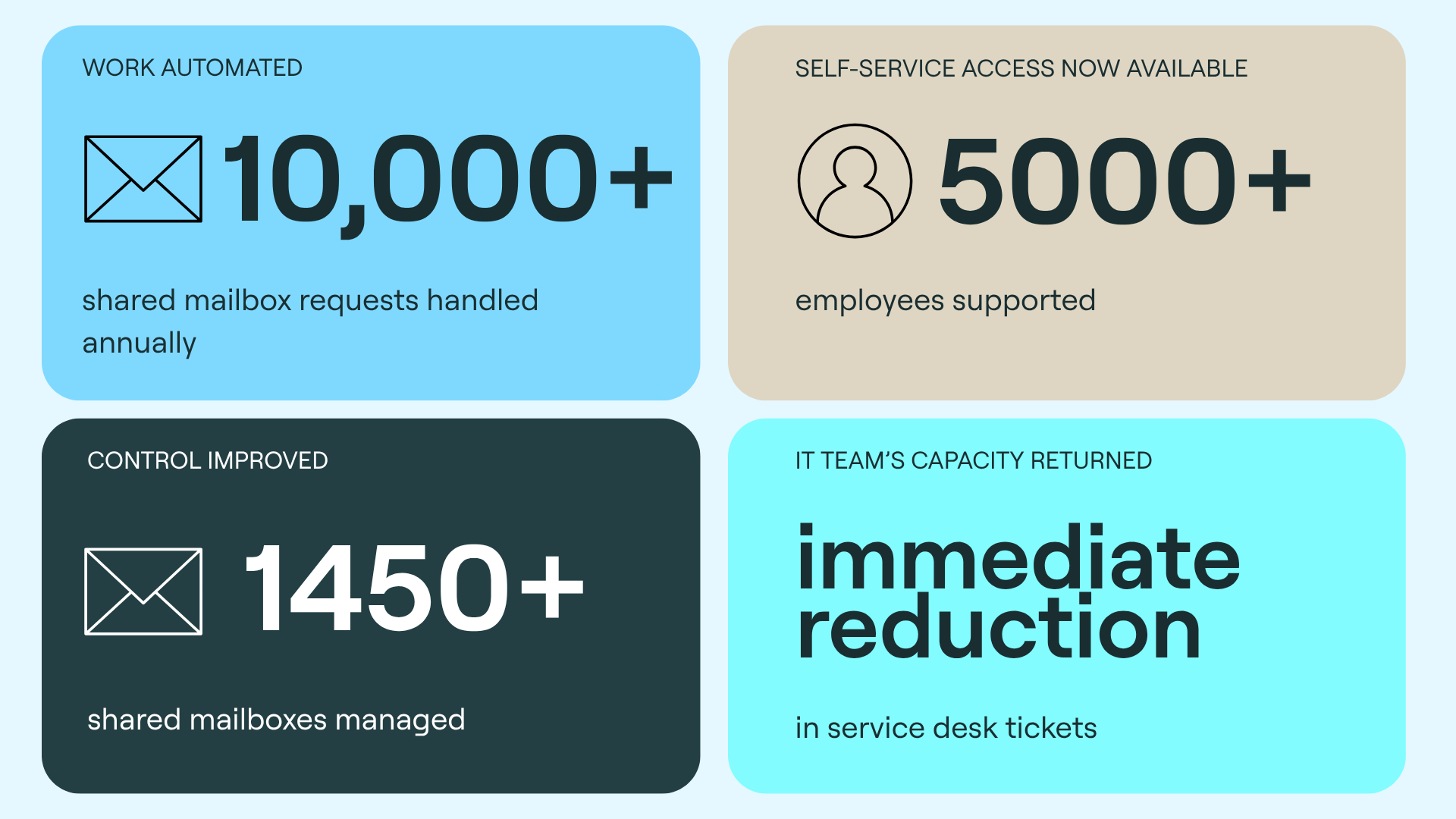
More than 10,000 annual mailbox requests supported through automation and self-service
More than 1,450 shared mailboxes managed
Self-service access available to over 5,000 employees
Immediate reduction in service-desk tickets
Less manual access fulfilment for IT
Faster access to shared mailboxes
Business owners able to approve and manage access
Consistent creation of new shared mailboxes
Improved visibility of mailbox access
Stronger security, auditing and compliance
The Bottom Line
The hidden cost of shared mailbox management was not one complicated request. It was more than 10,000 routine requests passing through the service desk every year.
By giving employees a self-service experience, putting approval decisions with business owners and automating fulfilment, the department reduced manual IT work without giving up control.
The result was a simpler service for employees, clearer accountability for the business and more capacity for the service desk.
How Many Routine Access Requests Are Reaching Your Service Desk?
If shared mailboxes and other everyday access changes still require manual tickets, Activate can help move requests, approvals and fulfilment into one controlled, automated process.